


Leaderboard
-
Trevor
Administrators56Points1,484Posts -
NissanFan
Members4Points4Posts -
Supersub
Members4Points13Posts -
Mickmoonie
Members4Points12Posts


Popular Content
Showing content with the highest reputation since 08/30/2021 in all areas
-
Hmm, seems like someone had the issue before and a bodge was carried to rectify the issue (or at least attempt to rectify it). There is an issue with the timing chains and as far as I can see it was a recall from Nissan. It does suggest that it occurs on hard acceleration (e.g. from a slip-road) and if the chain is slack it can drift away from the timing point by a small fraction (much like a loose timing belt) which can then throw a code for cam/crank timing and result in what you are experiencing. I would personally replace the engine oil and look to see what has come out - e.g. metal particles and then replace it with the specified oil which may have not been supplied with previously. https://www.autodoc.co.uk/car-parts/engine-oil-12094/nissan/pulsar/pulsar-hatchback-c13/107484-1-2-dig-t If you use a quality oil of the correct specifications (as listed in the link above) and see if that makes any difference to how it runs. If no real difference is noted then I would advise to get the timing chain replaced which will almost certainly make a difference if it is worn2 points
-
2 pointsI use a smart screen with Android Auto. Then connect my phone via BlueTooth and use Waze map. Less expensive and live updates of accidents, traffic jams etc.2 points
-
I had the same problem radio cutting off there is a fee upgrade from nissan now work perfectly it's a common problem2 points
-
Hello, I am joining this forum with hopes to be able to supply you guys with some hard to come by parts for your beloved Nissans, as the title states we are the second oldest Nissan dealer in the uk and we are looking to move some of our older parts that have been stored away for years. I will be doing a follow up post with our parts list which should have thousands of items for you guys to sift through at your leisure, I just wanted to test the waters to see how helpful this would be for you guys, any responses or comments appreciated. Kind regards, Oscar2 points
-
2 pointsHi all! Im thinking of getting a Pathfinder in the next month or two. Wanted something bigger for going fishing/camping and always loved the look of the Pathfinder. Especially the older shape (07/08 models). Has anyone got a rot free one with upgraded timing chain they are thinking of parting with? Thanks in advance 🤘🏻🙂 Harry2 points
-
1 pointGood day, all. I'm very happy you're all here, and hopefully we can be supportive and help one another. I'm looking forward to sharing ideas and insights! :)1 point
-
Thats an odd one but I would start by peeling back the rubber gaiters running into the rear doors and check for any breaks in the wiring. After that, I would put a secondary earth to the earth connections on wiring and ensure that there is a decent earth to complete the circuit - let us know how you get on with it1 point
-
Its such a scam and see it all the time - easy money for the garages. It is possible to fit replacement rubbers if all they are is perished. As long as they are not perforated and leaking grease or if there is any play in the joints then it is perfectly serviceable. Advise on the MOT sheet but not necessary to replace otherwise. Recently fitted a replacement lower arm on wife's Juke and then replaced it a year later as the first (cheaper one) knocked the joint out in no time - more expensive one, quite a bit heavier duty for the N/S location and almost twice the weight. An easy job to carry out yourself and definitely not £1200 worth of repairs. Kept the old rubbers to use if necessary in the future. :-)1 point
-
Thanks for your response, after i posted this, I took the car back to the mechanic to have the fault codes checked and none showed up. However, i decided to risk it and drive from Dublin to Longford, during the way for about 10 seconds two seperate time I noticed it struggling continuously and thats when the CEL came on flashing but after I changed speed it smoothed out and the CEL went away immediately. I let it rest for the night, this morning I decided to check for any fitting errors. I found that the air intake duct/snorkel was not properly fitted in the front, so it would've been sucking in the warm air of the engine bay which could cause the engine to struggle under stress. Though as far as I'm aware, this wouldn't cause misfires or CEL but this points towards the previous owner or his mechanic being very rough with their work. (This car has had the internal speakers, headlamps replaced, wiring damaged, connector damaged and incorrectly replaced spark plugs, so someone has been frequently toying with the internals) And this prompted me to check other fittings. The intercooler pipe(?) (image attached below had some issues which I don't know if they could be a clue or not. The right rubber part attaches securely to the middle plastic bit, its nice and tight, however, at the other end of this rubber bit (the far right of the picture, where it would connect to the intercooler) there is a bit of give. I can wiggle it a little. Then the shorter rubber tube (at the left of this image, which goes behind the engine, so I'm guessing connects to the turbo) had slight greasy residue where it connects to the middle plastic bit. Sorry for the word vomit, am I on to something? How did the mechanic even miss that the air intake duct wasn't seated correctly, and surely if they just ran their hand along the rubber tubing here they would've noticed the grease.
 1 point
 -
1 point
-
1 pointNissan are looking into my new car that was not giving the advertised range of 759 miles on delivery as they said it should (only giving 660 a 100 mile discrepancy. Car delivered with full fuel tank and only delivery mileage of 10 miles). second tank fill still only 660 range. Awaiting their investigation!1 point
-
1 pointSo, here's the saga. Offside Drum collapsed inside, my fault- long story. Anyway, new drums, studs, bearings, shoes, spring kit purchased, but could I find an ABS ring for the pixo anywhere? Nope! Eventually, Vertu Nissan offered me 2 rings for £201!!! Bought 2 used drums, cleaned/painted and fitted. ABS light turned off 👍 Moral of the story: Parts like this are becoming very difficult to get. Also, does anyone have any ABS rings? I have 2 brand new drums, with new bearings pressed in and ready to. They'll need the fings fitted, obviously. You can have them both for £50 plus whatever the p&p will be Tony1 point
-
1 pointHello I am looking for a Nissan SD25 Diesil engine which is out of a Nissan 20 Forklift. I am told the same engine was used in Nissan Cabstar and Nissan Bluebird vehicles in the 1980s. Our currant engine has a hole in the block so I am looking for a good block or a complete engine. Many thanks Colin1 point
-
1 pointMy thoughts exactly. I’m thinking that the 05-12 Pathfinder LE’s, when in 2WD, do not have the front transfer case engaged at all. There’s no hub lock or unlock on these. Unless selecting 4WD is what you’re referring to by manually locking the hubs. AWD is a confusing on this vehicle. I don’t think that the hubs are technically locked, but they’re obviously engaged, and the drive is put to the front by “The System” when it senses “Slip” I guess. And if your front tires are mismatched, it might sense slip continuously. I guess that I could put the truck up on the lift, start it and engage “Drive”(2WD), and just see what’s spinning. I would assume that the forward drive shaft always spins, but that the transfer case is not engaged. Another way would probably be to put on the new front tire on the front paired with the used front tire and go drive. If it’s a problem, the “VDC” and “Slip” lights would probably come on.1 point
-
1 pointThanks bloke, nice to be welcomed and pleased to be standing 😉 I haven't even looked through your forum but I'm guessing you're a street car forum,?.. I'm 4x4, although I did own a Datsun "shovel nose" back in the day 🙂 know a little of the early KA series... but I'm here looking for information on differentials.. C200 in the Nissan Navaras in Aust..1 point
-
Hi Trevor, Thank you for your input, anything helps at this point, much appreciated! All the best, Daniel1 point
-
1 pointSmashed my Kia and insurance gave me a Juke. 2 weeks in and I like it. It is a manual (the Kia was auto) but not a problem. It has a few annoying bongs and dings. It does seem to struggle a bit . The Dash says 4 but when you change up it struggles, Likewise in all gears . You need a few mph higher before you change. Otherwise it is fun to drive. Not sure why it had drive modes. I have tried all 3 but there doesn't seem to be any difference. I like the higher driving position. Seat belts are difficult to grab and fix. Seats are comfortable. Got it for another week before my car get's fixed. I will certainly look at the Juke when I replace the Kia but need an HeV.1 point
-
1 pointPossibly but the more I have driven it the more annoying all the bings and bongs have become. It maybe just that it is a rental but the radio is frankly crap. Can't find stations or when it does won't follow them on long journeys as frequencies change. This is true on the FM and DAB. The SatNav isn't interactive unlike my Kia so no notice of traffic, roadworks or road closures. The speed monitoring is pretty up and down with it registering the wrong speed limit about 50% of the time resulting in more bings and bongs it it thinks the limit is lower than it really is. These are irritations because I like the higher driving position and the vision. The seats are comfy and plenty of room for a car of it's size. Getting up to about 1200 miles now. My car is still in dock. When I get it back I shall be looking for a replacement. The Juke will be on the list to look at but I would need an HeV.1 point
-
I have a 2020 Marano with this very same issue. I keep taking it to the dealership telling them about it. They say there is debris in the tracks. We either keep it covered or in the garage. I do not park under trees. I don’t know what kind of debris they are talking about, I have noticed everything under the driver seat is rusted when I pointed that out to the dealership they told me it must’ve been up north for an extended time or near the coast neither of which is the case we have not been out of town to those areas. I put in a complaint with Nissan directly and I got some hateful woman who called me and said I’m denied because my car is out of warranty however I’ve been going with this problem since we bought it. I now realize that they never intend to help us. It’s terrible what it is doing to the inside of my car, I’d like to know what anyone might have done to get Nissan to take notice of this design flaw has anyone found a fix?1 point
-
1 point
-
Thanks for the welcome message. As to the models, I have always found them a better value proposition than the other Japanese makes, and that goes double for European cars. I have had other makes (briefly). Rover SD1 V8, Humber Imperial, Holden Commodores (my wife has had a series of wagons, up to her current 14 model SV6 wagon), and even an Aston Martin DB6 Vantage (for a couple of years). Thanks again, Phil1 point
-
1 pointHi folks Could anyone please tell me where we fill up the transmission fluid. Plus where to buy a van manual, has anyone converted this type of Nissan into a motor home? Any issues with rust around the roof line? And whats a good fix? Cheers Oliver1 point
-
1 pointSaying hello as a new member, been a member previously, now an X Trail owner after three Qashqaiss1 point
-
1 pointHi - just bought my first Nissan ... a 2008 1.6 ltr Micra K12 cc Sport convertible in silver. 3 previous owners and 116k on the clock... it was a cat n insurance write off due to light damage to boot lid and rear bumper! It runs excellently, even the intelligent key works (well most of the time - lol!) ... and the roof works perfectly, so looking forward to the summer months! A few pics the 'Micra Machine' attached. Cheers Steve!

 1 point
 -
1 pointHi Trevor ... thanks for your kind remarks! Yes, a month of ownership and no real disasters (yet 🤣) .... the keyless entry works 100% of the time but the keyless start is a bit erratic, often resulting in the emergency key being used .... I've replaced the batteries in the fobs and used WD 40 in the barrel .. but problem still exists ... any clues? .... also the replaced the front sidelight bulbs with LED bulbs and the nearside blows almost instantly ... mystery indeed! Cheers Steve1 point
-
1 pointHi again, i have found the culprit! before replacing the fuel filter i gave the hoses another check over, turns out the boost pressure hose has a big split in it around 2 inch in length! I have a new one on order. For now, i taped around the hose to “bodge” it and straight away the difference in pulling power was night and day!.. a big puff of black smoke and off she went! A fresh MOT and the family wagon is back on the road. 👏1 point
-
1 pointDefinitely do a fuel filter change and see how it goes then.....keep us updated1 point
-
Hi Trevor, thanks for the info. I'm going to be replacing the transfer box sensors shortly so I'll take a look whilst I'm under there. Im not 100% sure what I'm doing but trying hard to get the car operational asap. I've tried everything I can think of so far and still no dice. I appreciate the thinking and will let you know how I get on1 point
-
1 pointHi, Sadly the vehicle is not on warranty. The engine had gotten a fully rebuild and clearly this code is from a sensor picking up trapped air in the coolant system as it was full and bleed out but after a day or 2 of driving i noticed the coolant bottle was at min and would you believe the fault code light went out.. Happy out till the next fault...😆1 point
-
Thanks - I'll give the jubilee clip a shot and see if that tells me anything. It's at the garage today for service/mot so have asked them to check it out too.1 point
-
1 pointNissan note 2008 1.6 Petrol Having listened to my drive belt squealing like a strangled cat thought it best I changed it, car has done 140,000 on what I think was the original belt. First as it’s a 1.6 petrol it only has one belt, cheapest place was Halfords at £17. Next watched videos on how to change it, easy I thought, so set to work. Jacked up and on axle stand removed drivers side wheel then attacked the inner wing lining, lots of popper fittings and screws, lot of poppers broke on removal, made sure I had spares. Now I can see the drive belt, well cracked and shiny, slacked tensioner pulley bolt (13 mm) and removed the belt, easy. Checked out belt against new, all ok but could I get the new belt on, no way. Tried the tensioner pulley adjuster, this was a nightmare to get at as you cannot see it all touchy feelly, anyway the adjuster was rusted and not for moving, only option left was to remove the pulley. Cleaned it up and freed up adjuster, next challenge was to re fit the adjuster, which you have to do blind and you can only use one hand, after a lot of cursing I still couldn’t get the thing into position. Looked how to gain better access, remove the front grill and then get another pair of hands to hold the adjuster in place while I re fitted the pulley, easy. Put the new drive belt on and now with relatively easy access to the adjuster tensioned the belt. No more squealing, job took in total about three hours around two hours longer than needed. So before I do my wife’s car going to ensure the tensioner bolt is lubricated, was the main cause of the delay. Will also just remove the front grill and see if it can be changed without having to remove inner wheel arch liner. Hope my experience saves people time and effort.1 point
-
Okay, I did what I should've done before posting a question, and checked the technical manual. It seems getting the cluster out is straight forward. Remove radio, remove temperature controls, remove cluster panel and then remove the gauge cluster. Nissan calls it a "combination meter" for whatever reason. I've attached the relevant page here if someone else comes across this topic in the future. I haven't found where mileage is stored, but I'm assuming in the cluster itself. I'm gonna order one with similar mileage. If mileage turns out to be recorded somewhere else that would be a bonus, but if not a few extra thousand miles on the odometer won't hurt and won't set off any alarm bells during the next MOT.
 1 point
 -
Hello there im searching for a 1990 sunny coupe gti rear spoiler, hope somewhan can help me find one or hase one for sale.1 point
-
1 point
-
1 pointI will definitely check all of the points of ground connection, and make sure that all BCM connections are secure and dry. Thank you for that insight. I was researching where the BCM is located, and it appears to be behind the instrument panel. Is that correct?1 point
-
1 pointThankyou.shes got wheels now! I am trying to keep it as period as possible1 point
-
1 pointHi Trevor, thanks for this. Ended up buying the car yesterday, 2.0L Qashqai+2 Acenta. Drives real smooth, lovely and quiet, decent power, overall, very happy with it. One thing my wife has ordered is a new gear know as the other has worn - are these easy to replace? Gear knobs of old simply screwed off, but this has the lift handle for reverse, and I'm wondering how much trouble this may cause?1 point
-
Hi any advice tips for this model just purchased August 2022 Scotland. I am always willing to give a go simple small Car owner maintenance weekly jobs but due disability strictly no DIY or heavy lifting Spinal problems. Positively driving this Car first time ever today it fitted like a glove never had any Car like that and after nearly a year of not having a car great! I could sing notes hah!1 point
-
1 pointhi same has just happened to my note been looking on ebay for replacement are the ones listed for nissan juke the same? https://www.ebay.co.uk/itm/2040006817431 point
-
1 pointI would recommend getting something like a silicon hose which would be stronger and cheap to buy by the length Try Demon Tweeks as they have a good range of hoses1 point
-
We have a Juke in the family and the clutch is also quite lively and takes a few more revs to keep things smooth when pulling away1 point
-
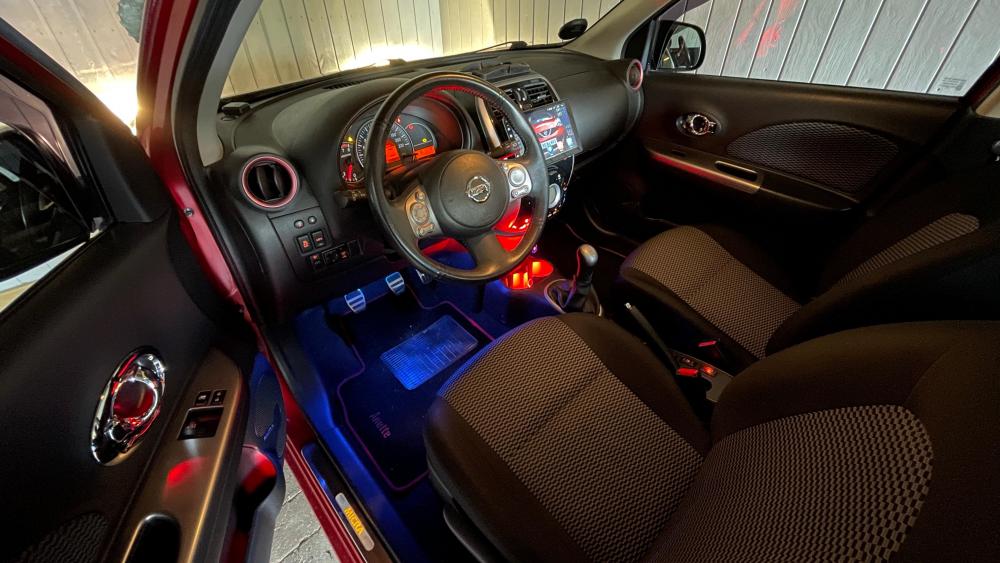
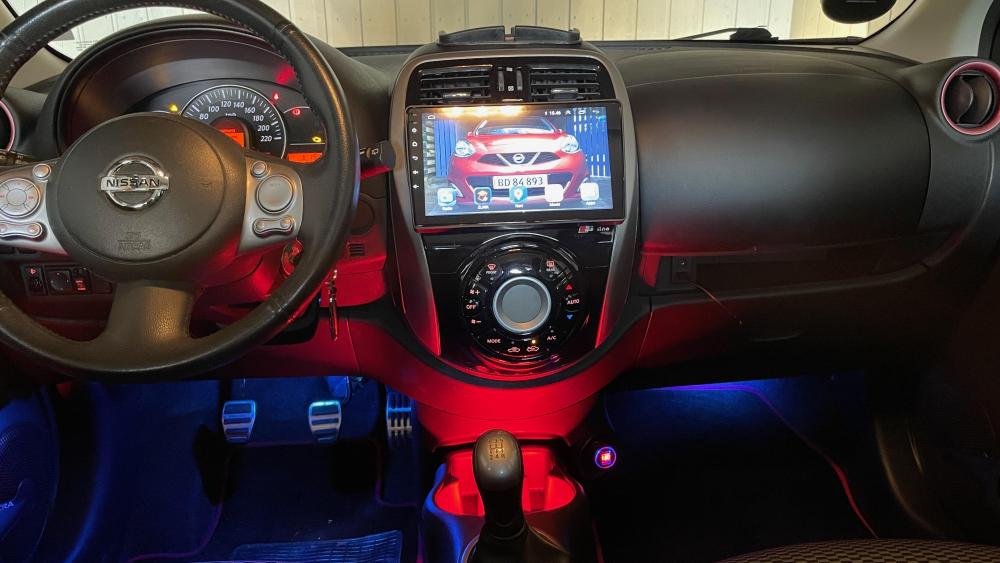
1 pointHi everyone, greetings from Denmark and thanks for membership. I´m here for tips and tricks, hope I can get some and give some. My car is a Micra K13 facelift
 1 point
 -
1 pointHi I have a set of Dynamic (led) wing mirror repeaters for sale. Brand new never fitted cost £15:85 selling for £13 plus p&p. 1 full set of Mud Flaps brand new never fitted cost £18:85 selling for £16 plus p&p. Thet are for a 2015 J11 model qashqai. If this post is not allowed sorry and please remove.1 point
-
1 pointHi there I have a 1988 nissan bluebird lx 1.6 for sale. The car has been garaged for the last 31 years (up to January 2021) and is mot'd until November 2022. I've been passed this vehicle from my gran who looked after it very well but she no longer drives. I'm looking to sell at around £1300/£1400 but will consider any sensible offers in this region. Photos attached. Please contact me on 07837 232737 or by email at lawrence.cormacey@gmail.com1 point
-
These issues sound a lot like software problems of the actually audio unit. Nissan do run software updates but you have to visit a dealer and request it. The update usually fixes issues such as Bluetooth connectivity issues, calibration and restarting issues. If problems persist however then you’re looking at audio unit replacement which I think are fixed in France.1 point
-
1 pointCommon fault on Qashqai is condenser failure. Perhaps your A/C system doesn’t have gas in and isn’t working accurately.1 point
-
I get this exact issue with my 2016 Juke, I connect to it through bluetooth and use spotify and it will just randomly pause for 10 seconds every now and again. I made sure to turn off traffic announcements, which helped a bit, but it still happens sometimes. Let me know if the re-calibration helps, i'll have to get it done myself!1 point
-
1 pointHello, Just found this page. I have a 1985 1800 SGL. I have owned the vehicle from new. I have every service record MOT etc. The car was in practical classic about 5 years ago. Never been rebuilt or sprayed all original. Runs like a dream. Cheers Paul.1 point
-
Hi....welcome to the Club Two things come to mind... 1. Crankshaft Sensor which looks for rotation of the crankshaft which will signal the Engine Management System (EMS) and give the command to fuel and spark dependent on engine speed. If this is faulty (usually when hot and the resistance changes) then this can cut the engine and start when cooled down. 2. Throttle Body adaptation which is adjustable using a scan tool. A lot of times this comes down to carbon build up and benefits from cleaning which gives a constant smooth idle speed A scan of the EMS should give stored fault codes which lead to a more precise diagnosis Let us know how you get on with it all1 point
-
Thanks Trevor, I feel the same, it's still under Warranty and I've since found out they can be re-calibrated for free so I'm going to pop into my local Nissan. I'll keep you posted with result 🙂1 point


